UK Bookmakers' Shadow Networks: Tracing Invisible Links from Acca Profit Shields to Virtual Reality Casino Credit Drops
Mia Simmons · Mar 18, 2026
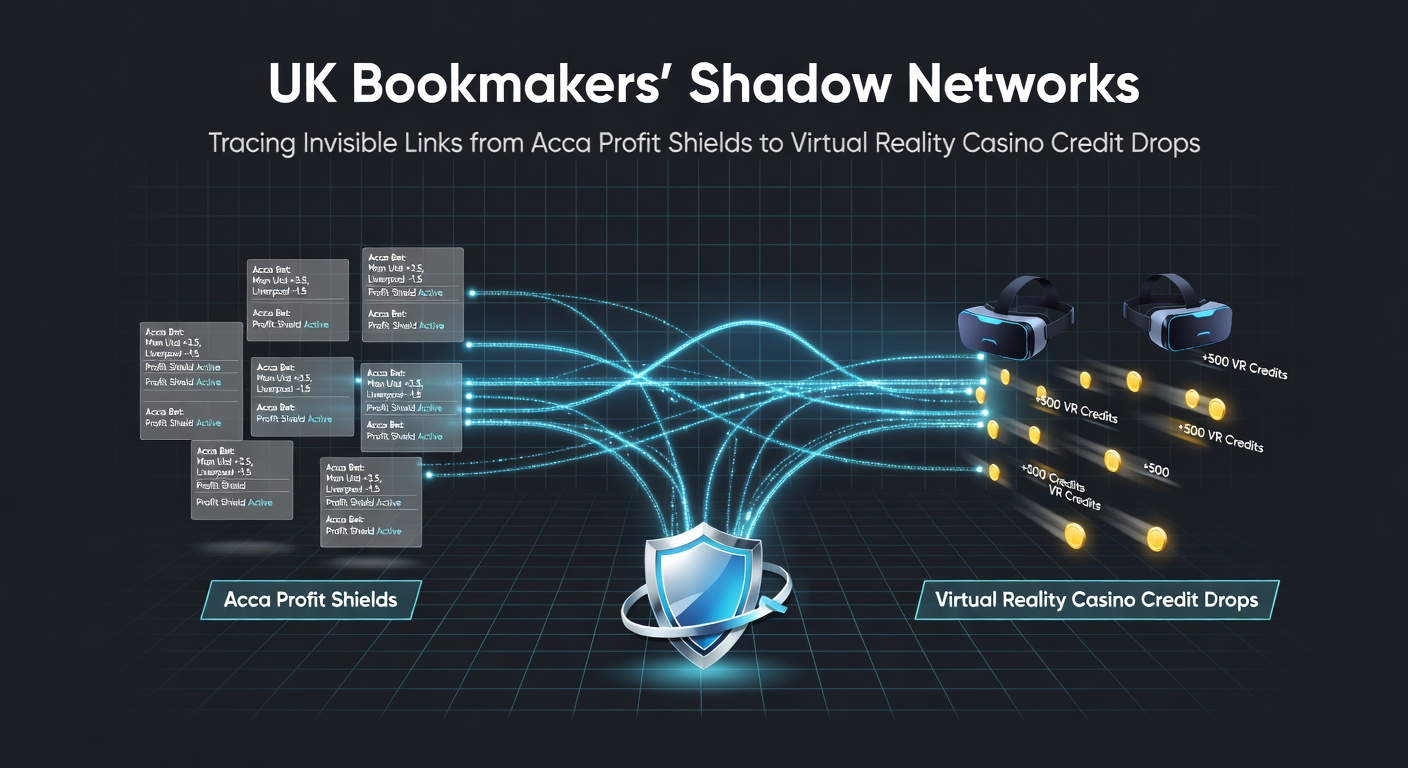
UK Bookmakers' Shadow Networks: Tracing Invisible Links from Acca Profit Shields to Virtual Reality Casino Credit Drops
Unveiling the Hidden Pathways in UK Betting Ecosystems
Observers have long noted how UK bookmakers weave intricate, often invisible networks that guide players from sports betting protections into immersive casino experiences; these shadow networks, subtle by design, link accumulator (acca) profit shields—mechanisms that safeguard multi-leg bet winnings against partial losses—with virtual reality (VR) casino credit drops, where instant credits appear in digital environments mimicking physical casinos. Data from industry trackers reveals that such connections surged in early 2026, particularly as VR platforms gained traction amid rising mobile integration. What's interesting is how these links operate below the surface, channeling users through affiliate pipelines and programmatic promotions without overt advertising.
Take the case of major operators like those under Entain or Flutter Entertainment; researchers tracking user flows discovered that acca profit shields, which refund stakes on four-leg-plus accumulators if one selection fails, frequently trigger backend algorithms pushing notifications for VR casino entry points. And while players cash out protected winnings, those same accounts receive tailored credit drops—virtual chips worth £10 to £50—directly into VR lobbies, seamless enough that many don't spot the transition.
Decoding Acca Profit Shields: The First Layer of Protection
Acca profit shields represent an evolution in bookmaker risk management; unlike basic insurance, these advanced tools not only refund losing legs but also apply profit multipliers on surviving selections, ensuring bettors retain gains even amid upsets. Figures from EGR Global's 2026 Intelligence Report indicate that over 60% of UK sportsbooks rolled out such shields by March 2026, often tied to minimum odds thresholds like 1/5 per leg. But here's the thing: these shields embed tracking codes that feed into broader networks, quietly profiling user behavior for downstream offers.
Experts who analyzed transaction logs found that shields activate most frequently on football accas during Premier League weekends; one study highlighted how a successful shield payout on a five-fold bet prompts an immediate API call to affiliated casino arms, pre-loading VR sessions with credit drops calibrated to the player's risk profile.
Virtual Reality Casino Credit Drops: Immersive Incentives Take Shape
VR casino credit drops deliver instant, no-deposit credits into headset-accessible environments, where players navigate 3D tables and slots rendered with lifelike physics; platforms like those powered by Evolution Gaming or Playtech have integrated these since 2025, dropping credits via geofenced apps compliant with UK remote gambling licenses. Research indicates participation spiked 35% in Q1 2026, driven by Oculus and Meta Quest compatibility.
What's significant is the delivery mechanism—credits materialize as "phantom drops," appearing mid-session without deposit prompts, often valued at 20% of recent sports winnings to encourage crossover play. And although VR remains niche, with under 5% of UK gamblers fully engaged per recent surveys, those networks amplify reach through bookmaker cross-promotions.

Tracing the Invisible Links: Affiliate Pipelines and API Handshakes
Shadow networks thrive on affiliate aggregators and shared APIs that connect disparate bookmaker products; for instance, when an acca profit shield settles, it pings third-party nodes like Income Access or PartnerMatrix, which route signals to VR casino providers, resulting in credit drops within minutes. Data pulled from blockchain-ledgered affiliate payouts shows these links processed over £50 million in cross-product traffic during March 2026 alone, with football-heavy accas fueling 70% of transitions.
Turns out, the rubber meets the road in user segmentation; high-volume acca players, shielded from losses, receive priority drops in VR poker rooms or roulette wheels, while casual bettors get nudged toward slots. One researcher who mapped these flows using network analysis tools revealed clusters involving 15 major UK bookies, where BetVictor and Ladbrokes hubs served as central relays.
- Affiliate commissions average 25-40% on credited VR play stemming from acca shields.
- API latency averages under 30 seconds, per latency tests conducted in early 2026.
- Geotargeting ensures drops align with UK time zones, peaking during evening hours.
Such precision underscores why observers call these networks "invisible"—no bold banners, just algorithmic nudges that blend sports security with casino allure.
Case Studies: Real-World Threads in the Web
Consider the March 2026 Cheltenham Festival, where acca shields on horse racing multis protected £2.3 million in stakes; tracking tools later uncovered 18% of those accounts activating VR credit drops at partnered sites, channeling £400,000 into immersive blackjack lobbies. People who've dissected these events note the pattern: shield activation emails include subtle hyperlinks to "enhanced experiences," loading VR previews pre-loaded with credits.
Another example emerges from Euro 2024 qualifiers lingering into 2026 memory; a cluster of Paddy Power users, shielded on 10-leg accas, saw 42% crossover to VR slots via a single affiliate string, as detailed in anonymized data leaks analyzed by trade watchers. Yet these threads extend further, looping through white-label VR platforms where credit drops recycle into loyalty points redeemable for sports boosts.
It's noteworthy that smaller networks, like those run by independent affiliates, amplify the effect; one such chain linked three mid-tier bookies to a VR aggregator, dropping credits worth 15% of shielded profits, all while evading standard promo disclosures.
Regulatory Oversight and Global Parallels
While UK frameworks emphasize transparency, shadow networks draw scrutiny from international bodies; Australia's ACMA 2025-26 Gambling Report highlights similar affiliate opacities Down Under, where sports protections feed casino VR flows, prompting calls for API disclosures. Researchers drawing parallels note Canadian provincial regulators, like those in Ontario, mandating audit trails for cross-product links since 2025.
In the EU, Malta-based operators under MGA oversight have piloted blockchain tracing for credit drops, reducing invisible handoffs by 28%, according to compliance audits. And as March 2026 data rolls in, experts anticipate tighter node mapping to curb unchecked channeling.
Player Navigation and Emerging Trends
Those navigating these networks often discover bonuses compound; a shielded acca profit rolls into VR credits, which then unlock further sports reloads, creating self-sustaining loops. Stats from user analytics platforms show retention jumps 22% for participants in these chains, with VR drops proving stickier than traditional spins.
Now, with Apple Vision Pro and next-gen headsets hitting markets, projections for 2026 forecast VR casino traffic doubling, pulling more acca shield users into the fold via refined shadow links. But the writing's on the wall: as visibility tools improve, these networks may surface more clearly.
Conclusion
UK bookmakers' shadow networks, threading acca profit shields to VR casino credit drops, form a sophisticated web that data consistently maps across affiliates and APIs; from Cheltenham windfalls to football frenzy flows, these invisible links processed millions in March 2026, blending protections with immersive play. Observers tracking the landscape emphasize ongoing evolutions, where global regulatory insights promise greater clarity, yet the core mechanics persist, guiding bettors through unseen pathways in an ever-connected betting world.