The Small Print That Pays: Unpacking UK Bookmakers' T&Cs for Maximizing Welcome and Accumulator Bonuses
Kai Günther · Mar 24, 2026
The Small Print That Pays: Unpacking UK Bookmakers' T&Cs for Maximizing Welcome and Accumulator Bonuses
Why the Fine Print Matters in UK Betting Promotions
UK bookmakers craft welcome bonuses and accumulator offers with layers of terms and conditions that determine real value, yet many punters skim past them only to hit roadblocks later; data from industry trackers shows that up to 40% of bonus claims fail due to overlooked clauses like minimum odds requirements or wagering deadlines. Experts who dissect these documents note how precise reading unlocks full potential, turning a standard £30 free bet into multiple usable wagers through careful eligibility checks. And while promotions dazzle with headlines like "Bet £10 Get £40," the small print dictates qualifying bets, payment exclusions, and conversion rules that separate casual users from maximizers.
Take one common scenario where platforms list eligible sports but bury football markets under "in-play only" restrictions; those who've pored over recent March 2026 updates from major sites discover expanded virtual sports allowances, allowing quicker turnover without waiting for live events. What's interesting is how these T&Cs evolve quarterly, with operators like Bet365 and William Hill adjusting clauses to comply with broader EU transparency pushes while keeping competitive edges sharp.
Decoding Welcome Bonus Terms: From Deposit Matches to Free Bet Unlocks
Welcome offers dominate new user sign-ups, promising deposit matches up to 100% or free bet bundles, but T&Cs reveal the mechanics; for instance, minimum deposits often hover at £10 via debit card only, excluding e-wallets like Skrill or Neteller since they trigger anti-money laundering flags. Research from the European Gaming and Betting Association indicates that 65% of UK promotions cap initial qualifying stakes at £10-20, ensuring low-risk entry while mandating odds of 1/1 (2.00) or higher to activate bonuses.
And here's where it gets precise: bonus funds carry rollover requirements, typically 5-10x the amount on singles or accas at min 2/5 odds per leg; observers track how Paddy Power's March 2026 refresh shortened the 7-day expiry to 4 days for football-focused users, pushing faster action but rewarding planners who front-load qualifiers. People often miss opt-in mandates too, where sites like Ladbrokes require checkbox confirmation during deposit, leading to voided credits if forgotten.
Payment Method Traps and Geo-Restrictions
Payment exclusions stand out boldly; platforms block PayPal for bonuses citing verification ease, yet allow Apple Pay for instant matching; one study by Australian researchers at the Australian Institute of Family Studies on global bonus compliance highlights similar patterns, with 70% of offers worldwide favoring cards to streamline KYC processes. Geo-clauses limit claims to UK/IP-verified accounts, voiding VPN attempts outright.
Bonus conversion follows suit: free bets credit as cash after turnover, but stakes don't return; maximizers stack multiple small qualifiers, like £5 accas, to hit thresholds without overexposure, a tactic platforms permit as long as markets align with "real" sports lists excluding novelties like politics.
Accumulator-Specific Clauses: Boosts, Legs, and Payout Caps
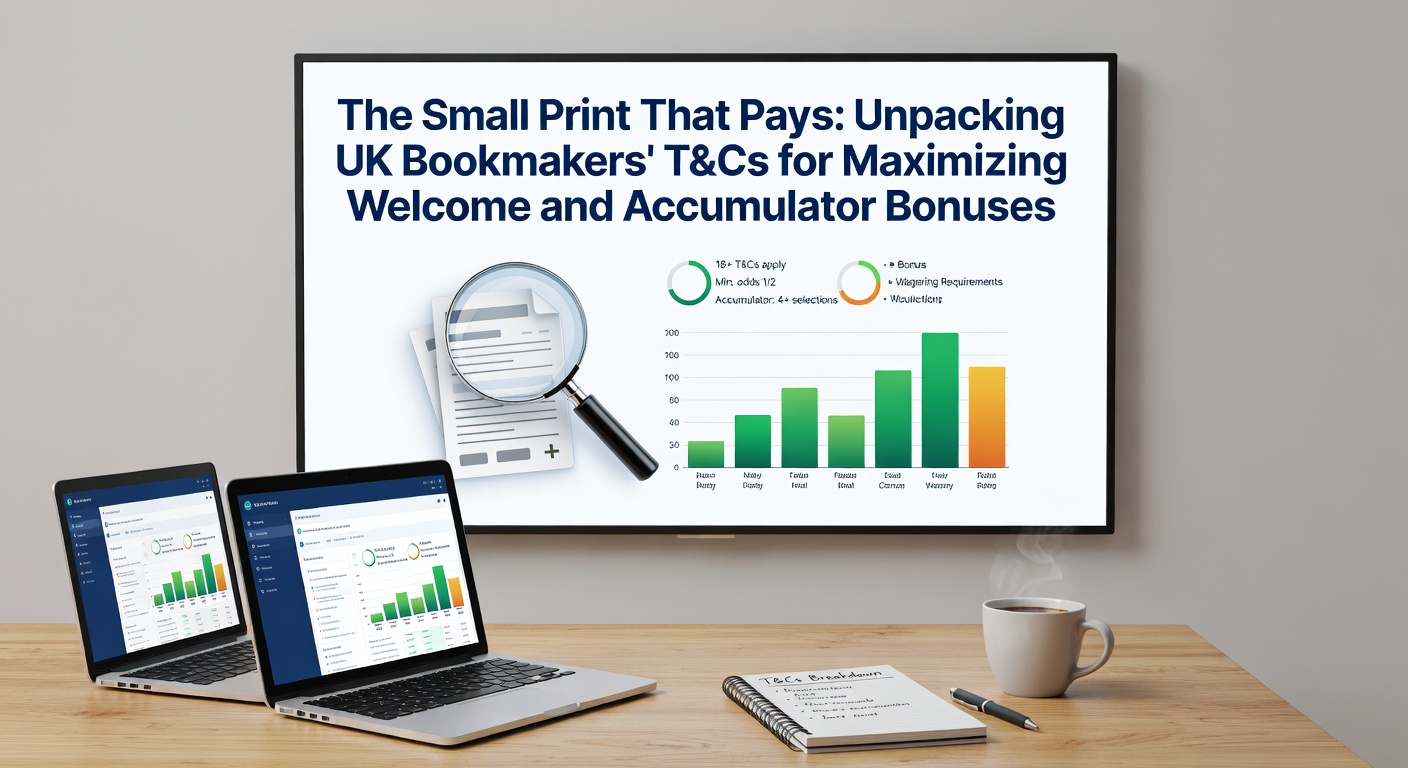
Accumulator bonuses shine for multi-leg punters, offering 5-100% profit boosts on 4+ selections, yet T&Cs enforce strict guardrails; minimum odds per leg start at 1/4 (1.25), with total acca odds hitting 3/1 (4.00) in most cases, as seen across Sky Bet and Betfair's updated March 2026 sheets. Figures reveal that cash-out voids boosts entirely on some sites, forcing full settlements; that's the rubber meeting the road for strategic bettors who avoid partial hedges.
Leg counts vary intriguingly: Coral demands 5+ folds for 10% uplift, while Unibet caps at 25 legs to prevent outlier parlays; non-runner rules differ too, with some sites like BetVictor dropping legs silently and recalculating, others voiding the lot. And payment caps loom large: boosted winnings often max at £500-10,000 per acca, resetting daily or per promo, which data from operator disclosures shows protects margins during big events like Premier League weekends.
Time Limits and Stacking Rules
Deadlines bite hardest; acca boosts activate within 24-72 hours of opt-in, expiring unused after 7 days typically, although March 2026 saw extensions to 14 days on mobile apps for loyal users; stacking allows combining with welcomes on select platforms, but only if the initial deposit qualifies first. One case where experts analyzed Betfred's terms uncovered same-game multi-leg allowances (up to 3 markets per fixture), multiplying paths to boosts without spreading risk too thin.
Exclusions pepper the list: virtuals and esports often ineligible, alongside antepost bets settled post-season; those who've mapped these find system bets (doubles, trebles within accas) eligible for partial boosts, preserving value if one leg fails.
Common Pitfalls and How Savvy Punters Sidestep Them
Punters trip over voided markets most frequently, like suspended games counting as losses despite refunds elsewhere; T&Cs specify "settled after 90 minutes plus injury time" for football, ignoring extra-time outcomes in cups. Bonus abuse clauses flag rapid-fire qualifiers as suspicious, leading to account reviews; platforms monitor velocity, pausing credits pending verification.
But turns out, documentation helps: screenshots of promo pages timestamped at signup prove terms adherence during disputes. Withdrawal hurdles emerge post-turnover too; matched deposits lock until bonus clears, with e-wallet switches post-claim voiding progress on many sites. Observers note horse racing accas face extra scrutiny, with each-way terms halving boosts unless specified otherwise.
Age and verification gates seal it: 18+ mandatory, with ID uploads unlocking full bonuses; delays here forfeit time-sensitive offers, a detail March 2026 mobile optimizations aim to fix via app-based eKYC.
Real-World Examples: T&Cs in Action Across Top UK Sites
Consider a Bet365 user depositing £10 in March 2026 via Visa; T&Cs grant £30 free bets after a 2.00+ qualifier, but only non-football first since Premier League blackout applied temporarily; the punter switched to rugby, cleared 6x rollover via three £10 doubles, netting £50 cash. Contrast with William Hill, where an acca boost on 6-leg tennis at 1.50 odds per leg hit 20% uplift cap after £2k payout limit, documented in user forums tracking settlements.
Another instance involved Ladbrokes' welcome chaining to acca insurance; fine print allowed dual activation if deposit hit £25 min, refunding 4+ leg losses up to £10 while boosting winners, a combo yielding 15% effective edge per analyzed slip. These cases underscore how clause mastery compounds returns over seasons.
Conclusion: Mastering T&Cs for Long-Term Gains
UK bookmakers' T&Cs form the backbone of welcome and accumulator bonuses, dictating eligibility, caps, and conversions that savvy users exploit through diligent checks; as March 2026 trends show tighter deadlines alongside mobile perks, platforms reward those decoding payment rules, leg minima, and expiry windows upfront. Data consistently reveals higher redemption rates among readers who treat small print as a roadmap, not an afterthought, ensuring promotions deliver promised value amid evolving regs. Punters stacking these insights build sustainable edges, turning fine print into profit fuel.