The Layered Architecture of Retention Mechanisms in Britain's Online Gambling Sector
Wendy Friedrich · Aug 1, 2026
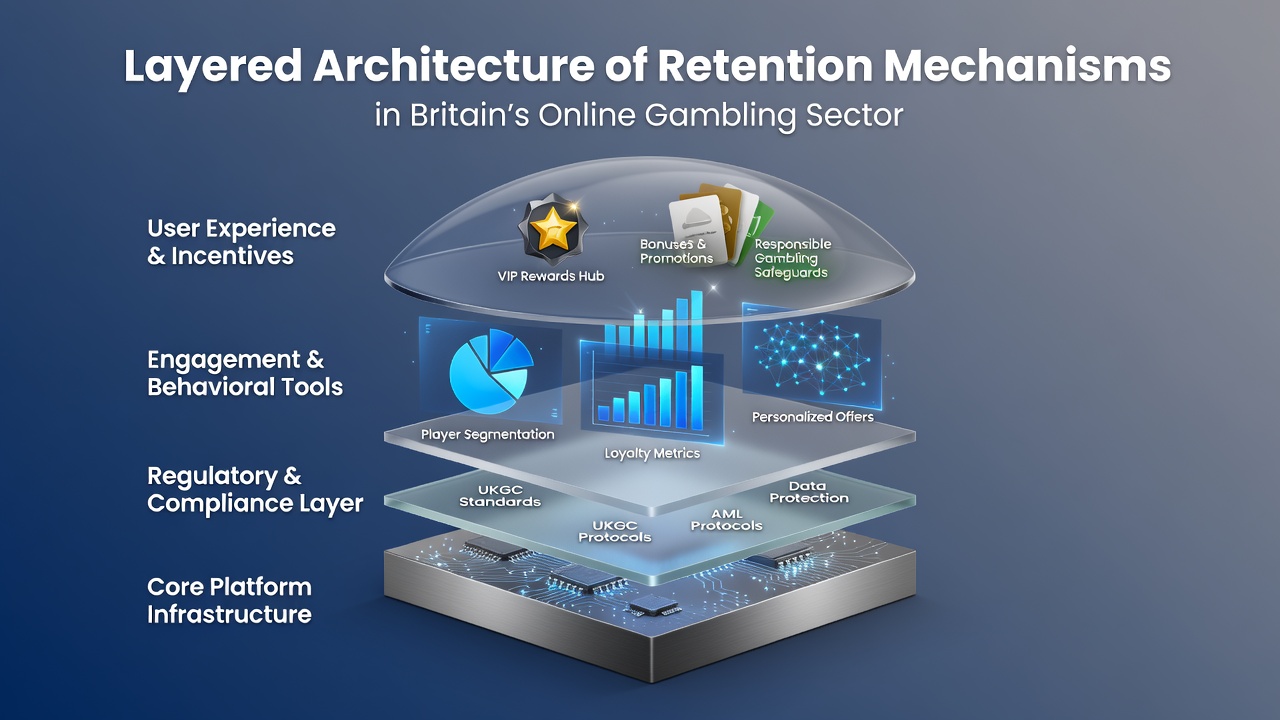
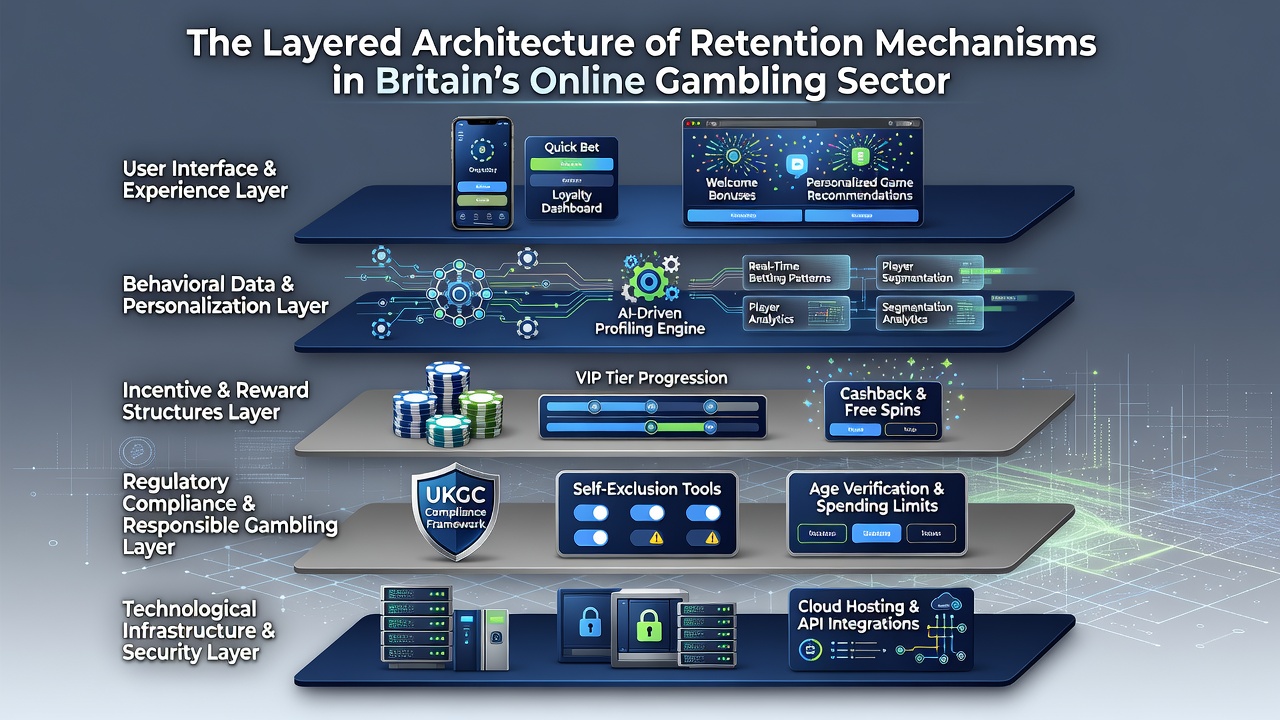
The Layered Architecture of Retention Mechanisms in Britain's Online Gambling Sector
Operators in Britain's online gambling sector build retention mechanisms through stacked layers that combine data systems, personalization tools, reward structures, and cross-product integrations, and these layers operate together to sustain user activity over extended periods. Research from the University of Nevada, Las Vegas International Gaming Institute shows that platforms relying on single retention tactics experience faster user drop-off rates than those deploying coordinated multi-layer approaches.
Data Foundation and Analytics Layer
At the base level, operators collect behavioral data from betting patterns, session durations, deposit frequencies, and game preferences, then feed this information into analytics platforms that predict churn risks and identify high-value segments. Systems process millions of data points daily, and algorithms flag users showing reduced activity so that targeted interventions can activate before full disengagement occurs. As of August 2026, several major platforms reported using real-time dashboards that update retention scores every few minutes, allowing immediate adjustments to outreach strategies.
Personalization and Communication Layer
Above the analytics base sits the personalization layer, where operators tailor messages, offers, and interface elements to individual users based on their historical data profiles. Email sequences, push notifications, and in-app prompts adjust content dynamically, and users who engage with sports markets receive different prompts than those focused on casino titles. Observers note that this layer often incorporates A/B testing frameworks to refine delivery timing, subject lines, and creative assets, while machine learning models continuously update user segments without manual intervention.
Tiered Loyalty and Reward Structures
The next layer consists of structured loyalty programs that assign users to progressive tiers based on cumulative activity metrics such as total stakes, frequency of play, and account tenure. Higher tiers unlock additional benefits including faster withdrawal processing, dedicated support access, and exclusive event invitations, and these structures encourage sustained participation because users see clear progression paths. Data from industry tracking services indicates that tiered programs correlate with longer average account lifespans across multiple operator portfolios in Britain.
Cross-Product Integration Layer
Operators further strengthen retention by linking sports betting and casino environments through shared loyalty currencies and unified progress trackers, so activity in one vertical contributes to rewards in the other. Users who place accumulator bets can earn credits applicable to slot sessions, and casino players accumulate points that unlock enhanced odds features on sports platforms. This integration creates multiple engagement loops within a single account, and platforms report higher monthly active user counts when such bridges exist between product categories.
Compliance and Responsible Play Overlay
Regulatory requirements add another operational layer that influences retention design, because operators must embed responsible gambling tools such as deposit limits, session reminders, and self-exclusion options directly into the user journey. These features run parallel to promotional systems, and platforms that integrate both sets of functions report smoother compliance audits along with maintained user trust metrics. Australian government health agencies have published findings on similar layered approaches in their jurisdiction, highlighting how mandatory safeguards interact with commercial retention tactics without necessarily reducing overall platform engagement when implemented thoughtfully.
Technology Infrastructure Supporting the Layers
Technical architecture underpins every retention layer through customer relationship management databases, application programming interfaces that connect different product modules, and cloud-based computing resources that scale during peak periods such as major sporting events. Platforms maintain redundant data centers to ensure continuous service, and updates to one layer propagate across connected systems without disrupting user experience. Those who have examined operator technology stacks observe that modular design allows individual layers to receive independent upgrades while the overall retention framework remains intact.
Measurement and Optimization Processes
Operators track retention success through metrics including day-one retention, thirty-day active rates, and lifetime value calculations, then feed these figures back into each layer for refinement. Teams review cohort performance weekly, and adjustments to personalization rules or tier thresholds occur when data patterns shift. Academic papers from Canadian research institutions on digital platform engagement have examined comparable measurement cycles, noting that continuous optimization loops produce more stable user bases than static retention programs.
Conclusion
Britain's online gambling operators rely on interconnected retention layers that start with data collection, move through personalization and tiered rewards, incorporate cross-product linkages, and operate under regulatory overlays, and this architecture continues to evolve as new technologies and compliance standards emerge. The coordinated structure supports sustained user activity across diverse player segments while meeting operational and regulatory demands that define the current market environment.